
Which Products Deserve Priority? Using SEO Research to Focus Your Website Marketing
How should industrial businesses with established products and sales decide what to promote on an English-language website? Drawing on an abrasives project, this article explains how SEO research connects products with target-market demand and guides product and content priorities.

The client is an integrated manufacturer and trading company supplying abrasives and abrasive tools. It already had an established domestic business and good overseas sales through the third-party trade platform Made-in-China. Familiar with its products and supply capabilities, the company wanted to rebuild its own English-language brand website, take control of its core assets and continue expanding overseas.
The previous article introduced the client case as a whole. This one focuses on two questions before the build: with abrasive tools, abrasives and refractory materials already in the range, what should the new site promote first? And how should subsequent content be organized around those products?
We combined product research with SEO research to help the client make those decisions.
The products are established. Which should the new site promote?
The client proposed a product scope based on its existing business and sales. But its earlier website had been managed by a third party, and the company had not organized the products and supporting materials clearly itself. Rebuilding the English site meant matching product names, images, specifications, applications and technical documents item by item.
Preparing materials and promoting products both take time. What to organize first and what to feature most prominently need to be decided early in the project.
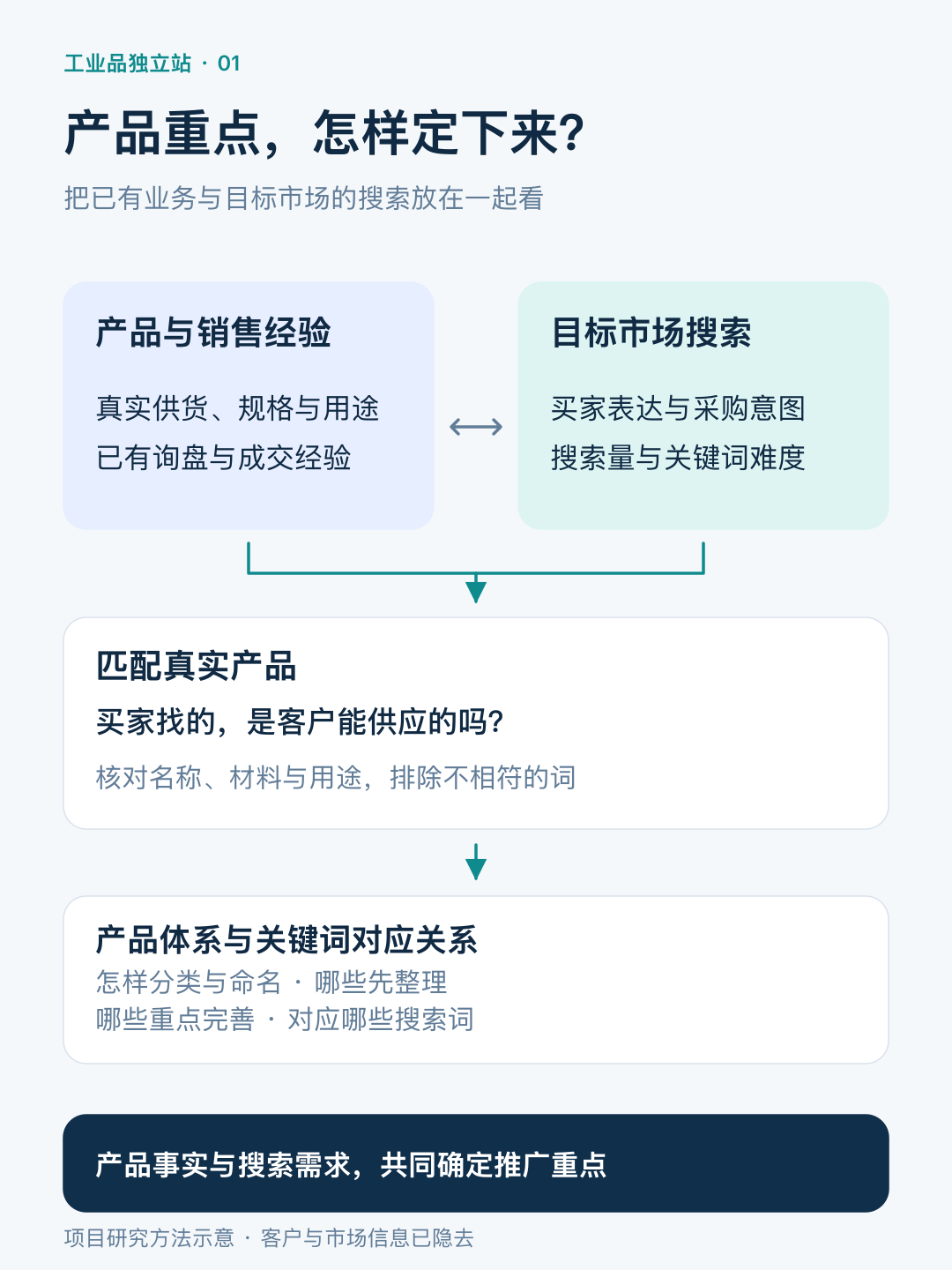
That decision requires looking at the company's existing business alongside demand in its target markets:
Existing sales data reflects the business the company has already reached and won: which products have attracted inquiries, which have sold, and which products salespeople frequently discuss with customers. That experience helps identify business worth developing further.
SEO research adds information about how buyers in target markets search for products, what they need and where competitive opportunities exist. It answers: what terms would buyers use to find these products if they had never encountered this company through its existing channels?
The two sources need cross-checking. Do products that sold well previously have corresponding search demand in the target market? Can the client actually supply what a search opportunity calls for? Both need confirmation.
We started with the client's proposed product scope and target markets. By organizing product relationships and researching the corresponding search demand, we gradually clarified the product structure, promotional priorities and content plan.
First: match actual search demand in target markets to the client's product range
To establish promotional priorities, first confirm whether someone searching a term is looking for a product the client can supply.
Similar industrial product names may refer to different materials, forms or applications. Search terms must be checked against product information to establish a real match.
We examined estimated search volumes and keyword difficulty in each target market to identify demand signals and compare competition. We then inspected the results to understand which products the terms referred to and whether searchers wanted suppliers, selection guidance or technical information.
Terms with similar names but mismatched materials, applications or buyers needed excluding or further checking. Only after search demand matched a real product did we assess whether it deserved priority.
In this project, one existing abrasive product had purchasing-related searches in several target markets that matched its actual applications, with relatively low difficulty scores in the keyword tool. Combined with the client's existing supply capabilities, this supported prioritizing its product page, especially applications, grit sizes, technical information and packaging conditions.
Here, product information established what could be supplied, while search research added evidence about market demand and competition. Together, they supported the decision to invest in that page.
Search data provides external evidence; the client's business experience helps determine whether the demand is worth pursuing and whether the company can fulfill it.
We organized the findings into a map connecting the product structure with keywords, setting out business lines, product categories and individual products, and identifying English names, target-market keywords and priorities for the current phase.
The client could then decide which products belonged together, which English terminology to use, and where to prepare materials and improve pages first. Products genuinely supplied still need accurate representation. Those without clear measured search volume can first receive complete catalog and factual information, with further SEO investment assessed later.
SEO research can also reveal market opportunities
Keyword research connecting products and searches can uncover opportunities that the existing product range has not yet tapped.
One opportunity in this project came from an English search term for another form of an existing product. After finding the demand, we checked the products and applications in the results, then confirmed them with the client.
The client already had the supply capability but had overlooked demand for that other form. We prioritized a content cluster around it and recommended making its content promotion a high priority.
This work largely established a product structure aligned with market demand. The next step was content promotion planning.
Second: plan content clusters alongside priority products
As product priorities take shape, the client also needs to know: beyond product descriptions, what content should come next to help buyers continue selecting and purchasing?
Start with the problem the buyer currently needs to solve:
The product is already identified: the buyer needs to verify specifications, operating conditions and supply information.
The buyer knows only the machining task, material or equipment: they first need to understand which type of product is suitable.
The buyer is comparing options: they need to understand product differences or a technical specification.
To attract buyers at these different stages, the website needs to answer the corresponding questions. Even with a relatively stable catalog, useful content remains to be added around selection, applications and technical conditions.
While researching product keywords, we therefore also collected related search terms and questions about selection and comparison. We combined target-market demand signals, priority products and existing materials to decide which questions were worth answering and how to organize the pages. All of this was grounded in keyword research data, rather than invented topics.
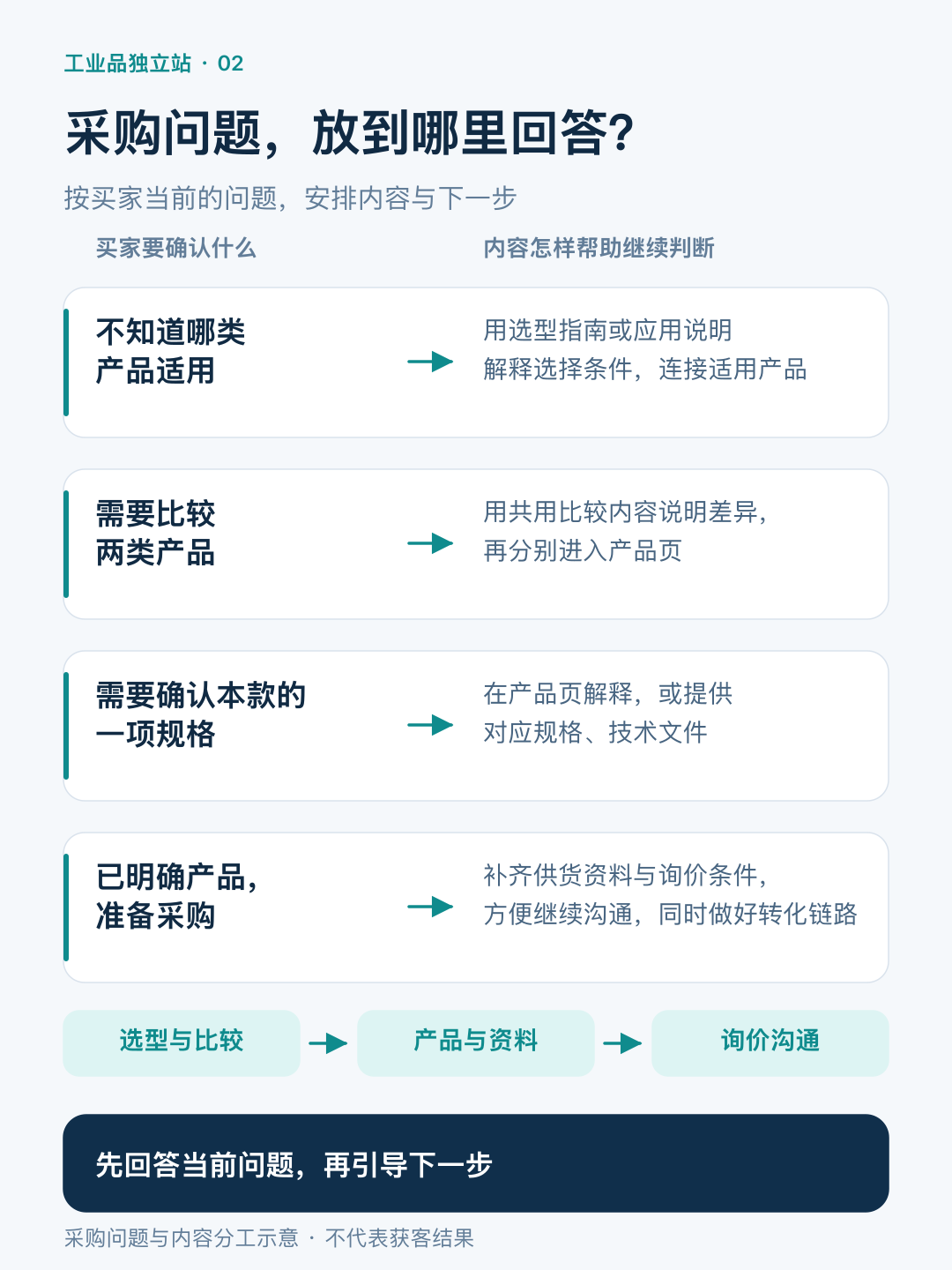
Connecting relevant products, purchasing questions and their corresponding content formed the project's content clusters. A cluster can be understood as promoting one topic through a collection of the information target customers need at different buying stages. A guide helps them choose, a product page explains the particular model, and supporting materials help them verify details or request a quote.
In planning, different search phrases for the same comparison question were grouped into one article. Explanations specific to one model's specifications stayed on its product page. Questions requiring technical documentation became tasks for the client to supply that material first.
For the priority abrasive product mentioned earlier, the initial plan focused on its existing product page: completing applications, grit sizes, technical documents, packaging and quotation information, without a separate article for now. Guides or shared comparisons would cover other purchasing questions involving selection across products.
Product priorities determine where to invest first. Purchasing questions and product information determine what to add and in what format.
The content plan shows the team what each item answers, which products it relates to, what material is missing and where readers should go next. Gaps in information or new supply questions go back to the client for confirmation and further product research.
The client receives product priorities and a plan for subsequent promotion
This research produced two connected deliverables.
The first is the product-and-keyword map. It helps the client see how products are categorized, which terms to use in target markets, and what to organize and promote first, setting an order for preparing materials and planning the site.
The second is the content-cluster and execution plan. It defines which purchasing questions to answer around priority products, whether they belong in product pages, guides, comparisons or technical documents, and what supporting material, content connections and sequence of work are needed.
Together, these deliverables turn recurring decisions into specific arrangements: which products to improve first, what to explain clearly, which content to create next and which materials the client must supply.
The client team can use them to prepare materials and produce content in stages. Responsibilities for later updates and reviews still need to be assigned within the project.
If your business is building or promoting an industrial products website
If you have established products and sales and are building or revising an English-language industrial website, but are unsure where to invest first in products and content, please contact us.
Include your current website, main products, target markets and current difficulty. We can help clarify the problem and scope of work.
Email: contact@nowupdating.com
References and notes
This article is based on a real NOWUPDATING client case.
Content clusters start with real purchasing questions. Google's people-first content guidance also cautions against adding or removing large amounts of content merely to make a site appear fresh.