
AI Overviews Expand Automatically: Even Fewer Clicks for the No. 1 Result?
For some queries, AI Overviews now expand into a full answer automatically, pushing organic results further down. Rankings, visible placement, AI citations and website clicks need to be assessed separately.

In May, I wrote “Ranking No. 1 in SEO Does Not Mean Anyone Can See You,” about pixel position: ranking first in Google does not mean users can see your result in the first screen. AI Overviews and People Also Ask keep pushing organic results down.
On August 28, that development went a step further.
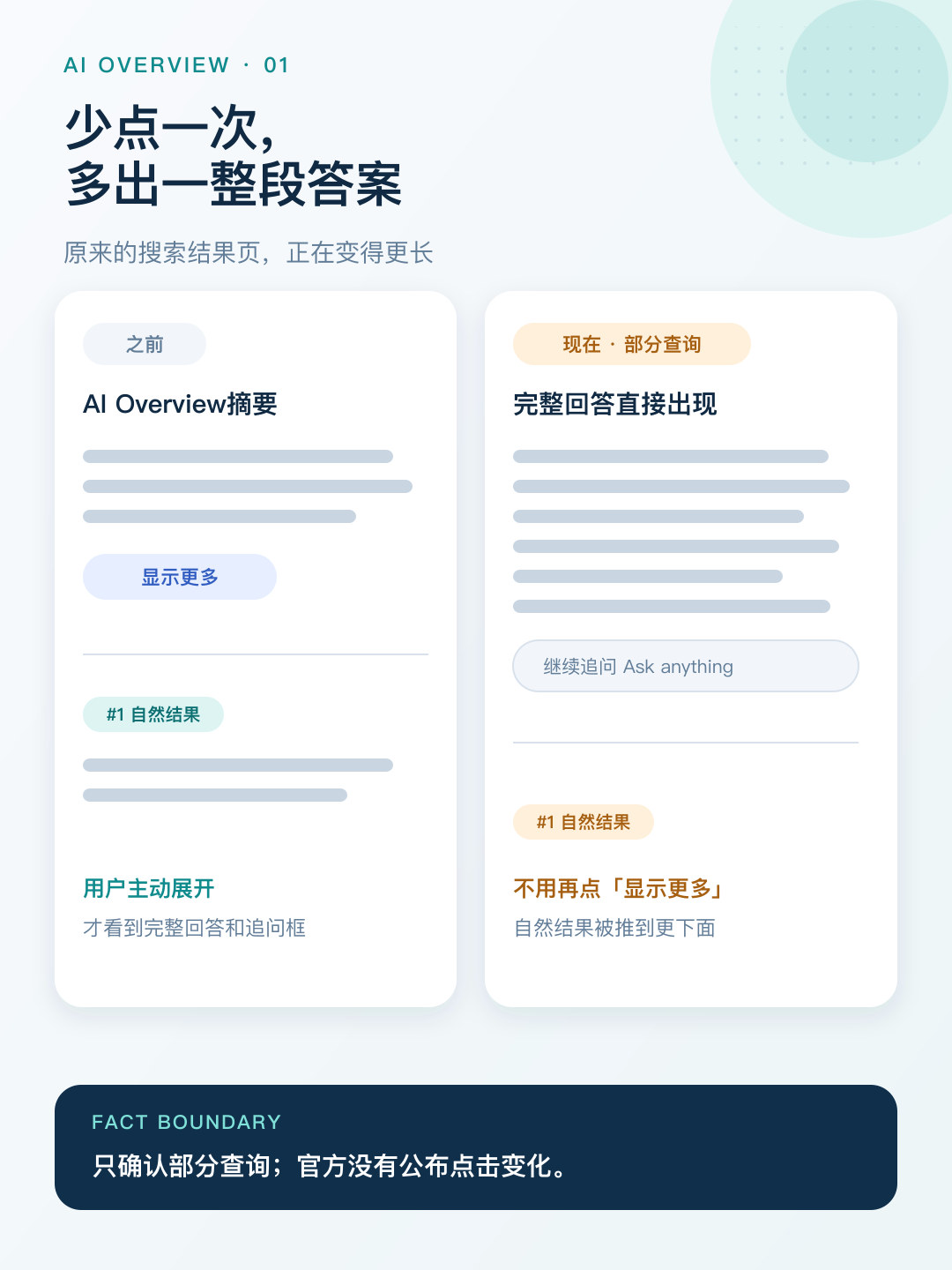
Google confirmed that AI Overviews for some queries would expand directly into a complete answer, without users having to click “Show more.” The follow-up question box below is open by default. Organic results move even further down.
First, a qualification: this applies only to some queries. Google has not disclosed its coverage or changes in clicks. Its official explanation is that the system expands the answer when it considers that useful, and the behavior is still being adjusted. This is an intensification of the existing trend, rather than a turning point.
I have three observations.
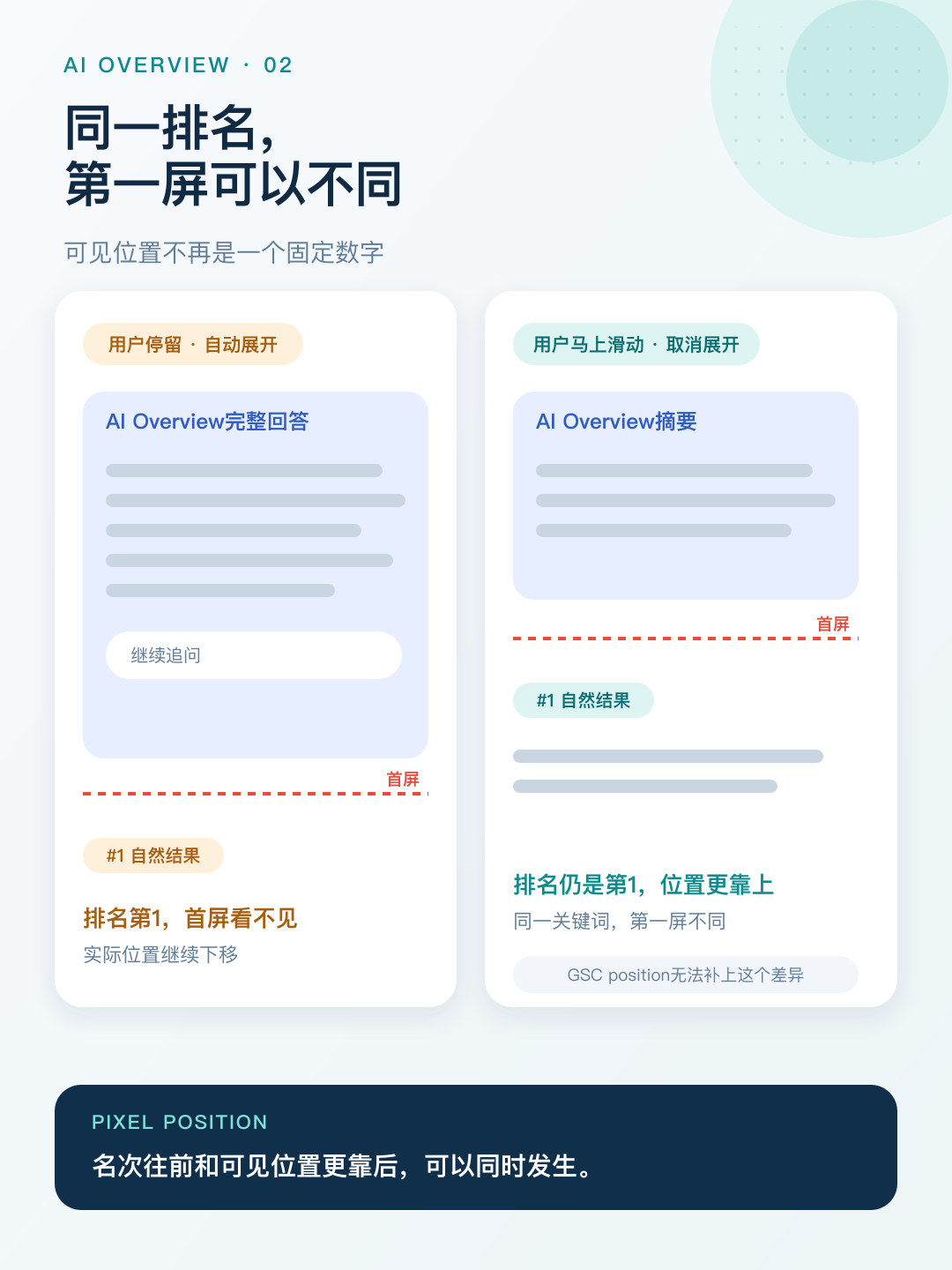
First, visible placement is no longer a fixed number. Google says that if a user has already started scrolling, the expansion is canceled. For the same keyword and the same ranking, users who stay still and those who immediately scroll see different first screens. Search Console's position measures the result's order, not its distance from the top of the page; it cannot supply that missing number. So if rankings improve but clicks do not, do not immediately assume the data is wrong. A better ranking and a lower position on the page can now happen at the same time.
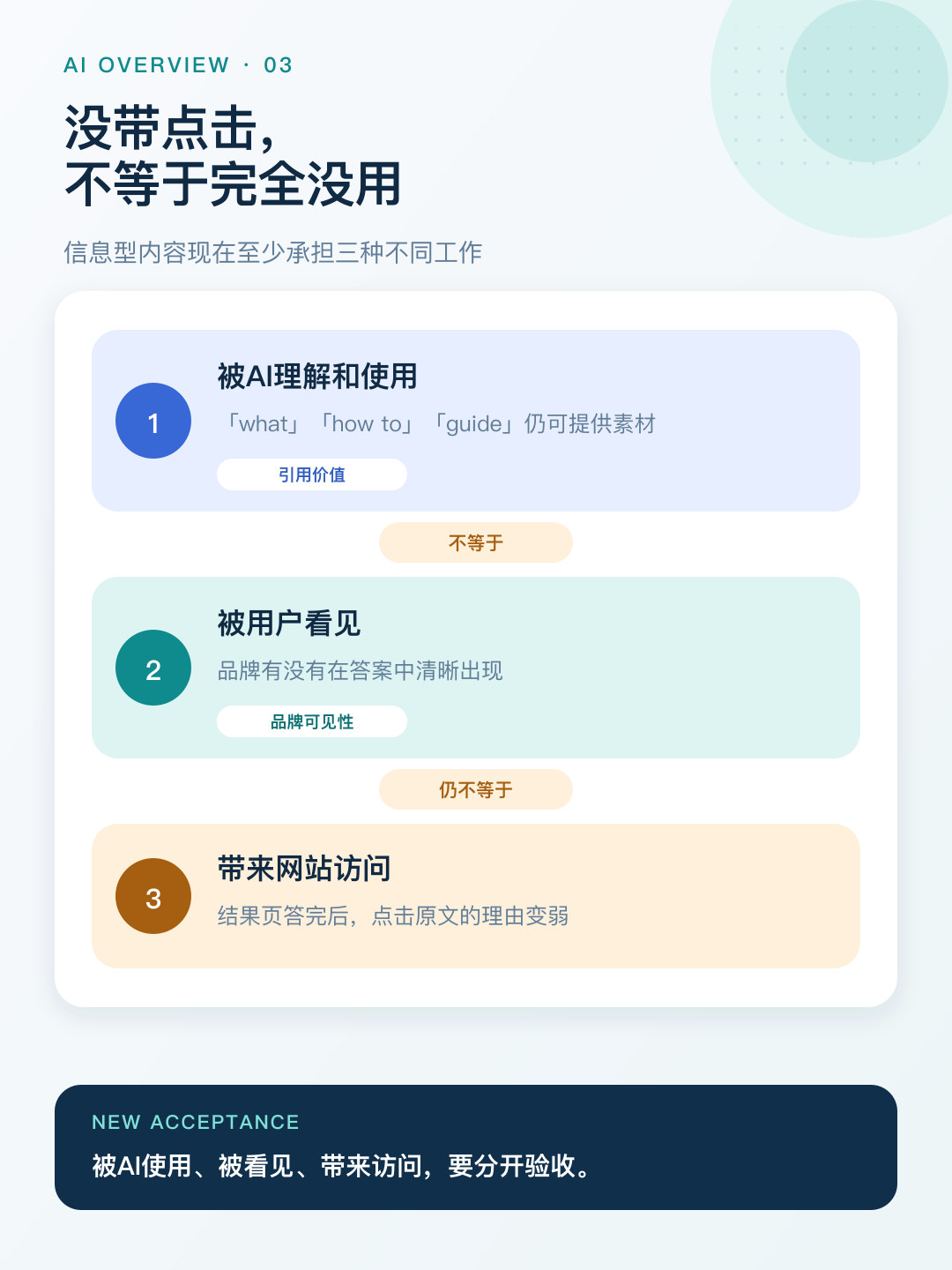
Second, the value of informational content needs to be assessed in separate parts. That determines whether to keep writing these articles and how to evaluate them. “What,” “how to” and “guide” content can still help search engines understand a site and may be cited by AI. But once users get their answers on the results page, they have less reason to visit the original article. Being used by AI, being seen by users and bringing visits to a website are three different things. If traffic is the only measure of success, the conclusion will be “It is useless; cut it.” Yet the content may still be doing the other two jobs, just without clicks.
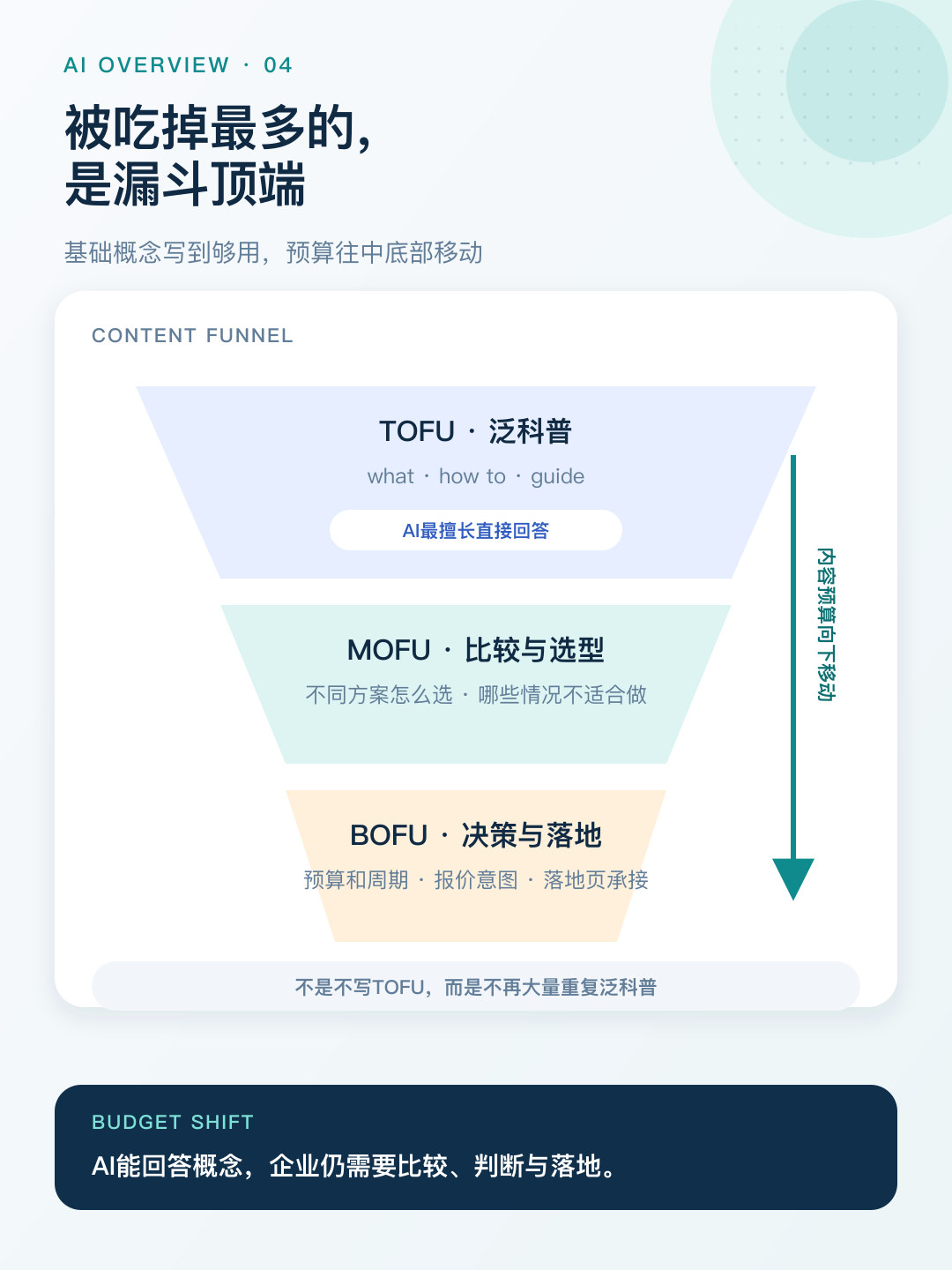
Third, most of the loss is at the top of the funnel. General explanations are precisely what AI Overviews answer best; the closer users get to a purchase decision, the less these answers can cover. Google has not specified which types of queries will expand, so this is an existing situation becoming more pronounced. Cover basic concepts adequately, then shift budget toward the middle and bottom of the funnel: how to choose between options, when a solution is unsuitable, and how to assess budgets and timelines. Landing pages must also be ready to address selection and comparison questions.
This change does not yet prove that clicks will decline, and Google has not supplied data. But the number in a ranking report cannot explain either whether people see you or what your content is doing for you.
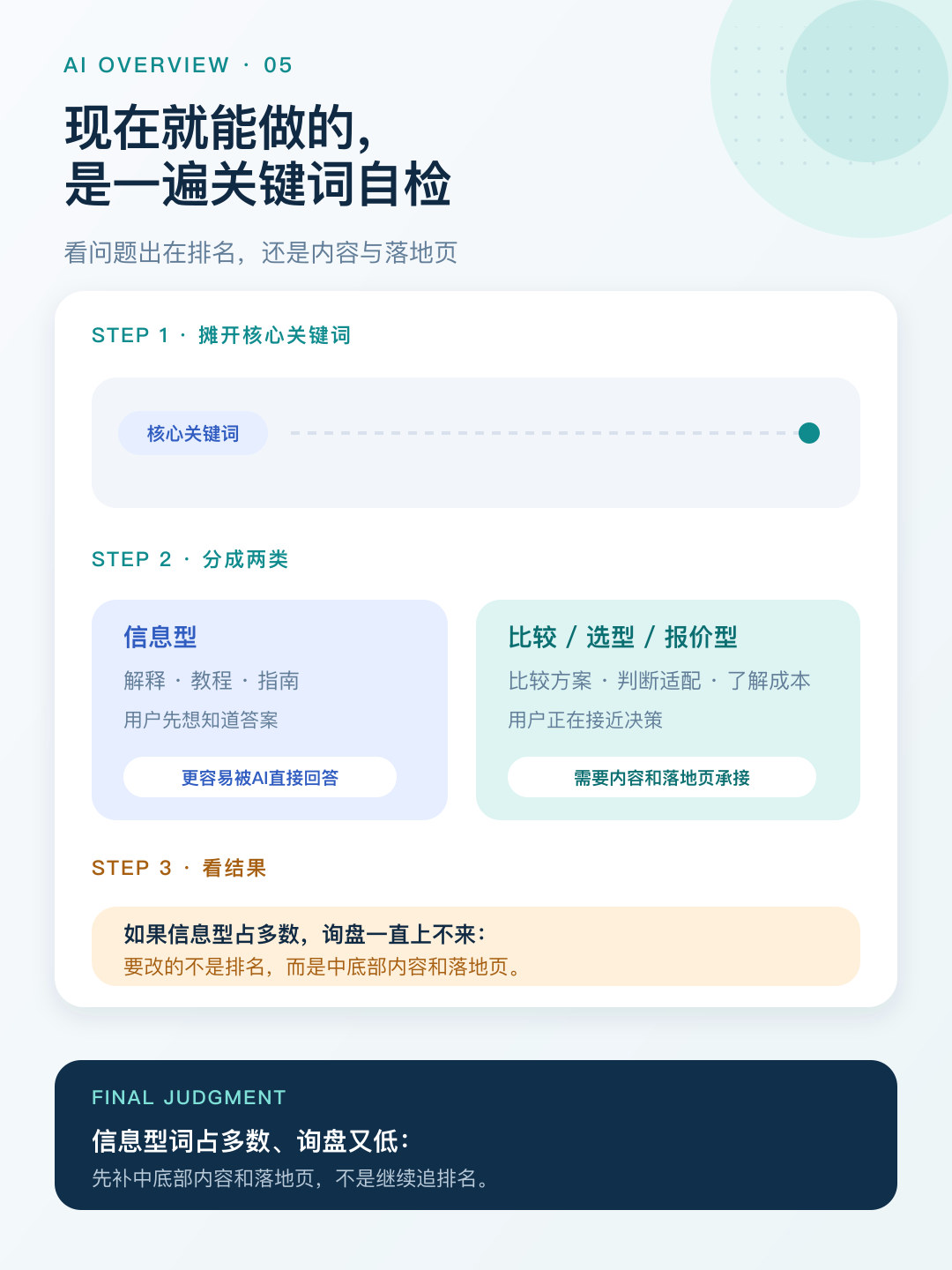
There is one thing you can assess now: lay out your core keywords and identify whether they are informational or express an intent to compare, select or request a quote. If most are informational while inquiries remain low, the work needed is on middle- and bottom-of-funnel content and landing pages, rather than rankings alone.
Related reading
What Determines Google Rankings in 2026? The Latest Views of 131 Experts
After AI Overviews Take the Clicks, Is Google Starting to Pay Content Contributors?
Discuss your search growth needs
If rankings are not bringing visits or enquiries, tell us about your website and target markets to discuss SEO and content work.